Case study / Product / Hardware innovation
SonoSite | The superhero moment, and everything that gets in its way
Scott Wilson, the former Nike Innovation Kitchen designer and founder of MNML, hired me to help redesign SonoSite’s market-leading portable ultrasound. The physicians we interviewed arrived ready to list what they wanted from a new device. I asked them about the context of healthcare, ultrasound, and the product landscape. Buried in those conversations, unprompted, the same moment kept surfacing: a surge of confidence at the screen, with friction on every side of it, from “being called into a meeting” to malpractice worry to hunting for a machine that was charged. Protecting that confidence became the PRD.
The context
SonoSite was the market leader in portable ultrasound, but rising competitors were eating away at their advantage. While internal human factors teams focused purely on technical feature sets, I set the strategy for our research engagement with a range of physicians: ER, breast care, anesthesiology, and internal medicine. Each interview began with a step back: the changing role of healthcare, how ultrasound had evolved, their views on the competitive landscape. Then we dove into SonoSite’s device.
What we heard and saw
Asked for context, physicians described their day. It was a list of burdens. Being called into a meeting. Worry about malpractice. Digitizing records. Walking the floor to find the machine, then guessing whether it was charged because the battery light was not obvious. Working the contrast and capture controls with the wrong hand because they were not on the probe, and often losing the image they had worked so hard to find.
Then, unprompted, the same story from different doctors: a moment where they saw something on the screen before anyone else and knew immediately what to do. They did not describe it as a feature. Their body language changed and they “grew.” They expressed excitement, even joy.
The insight
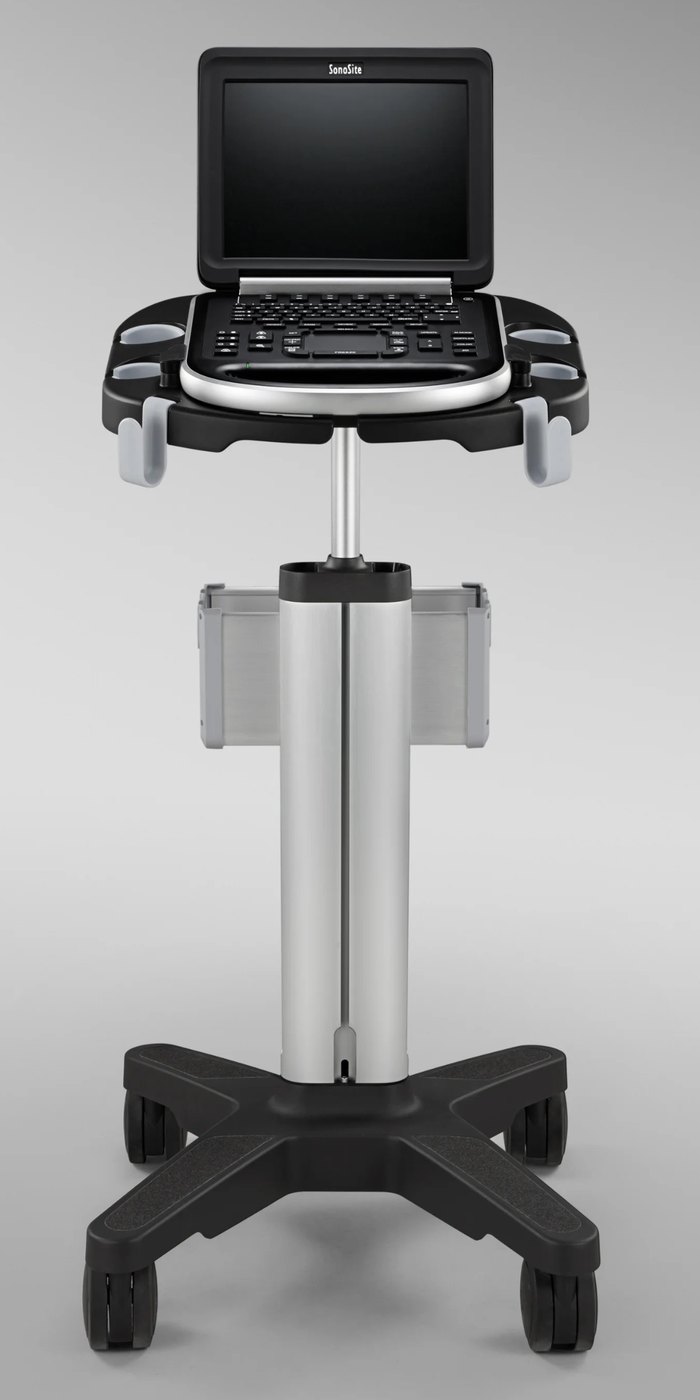
The product was not competing with other ultrasound machines. It was competing with everything in the day that distracted the physician before they got to the moment that mattered.
That reframed every friction we had logged. A hard-to-find battery light was not a usability defect. It was one more reason the moment might not happen.
What changed in the design
The brief leaned into the idea of a “surge of confidence,” small personal superhero moments. We built a journey map that logged every touchpoint against a confidence baseline, and challenged the team to improve interactions large and small. Every decision was tested against whether it contributed to a more confident physician–ultrasound experience.
The overall design brief was to simplify, put more features into the probe hand, and make the cart more useful. SonoSite had debated getting rid of the cart altogether, but doctors valued it.
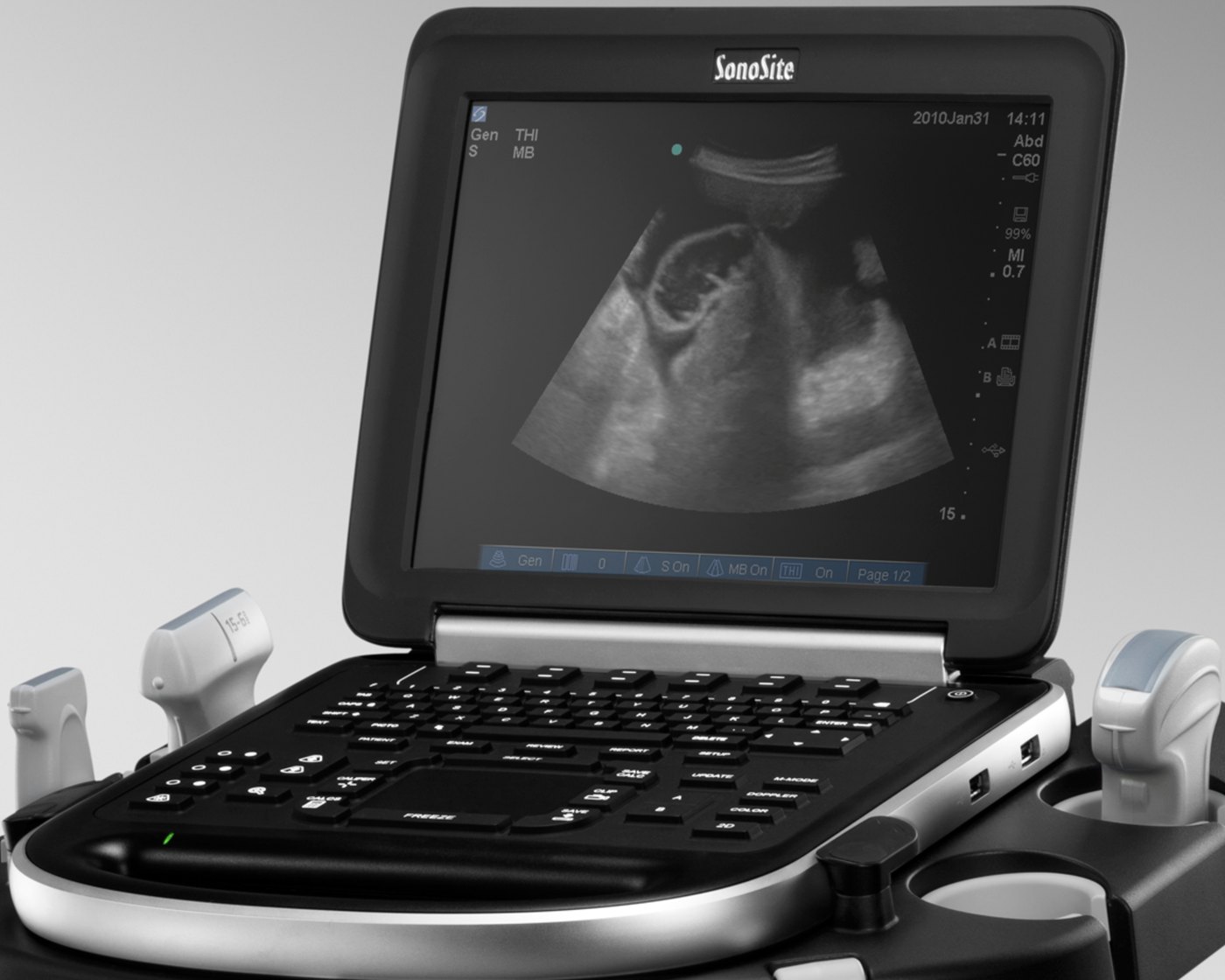
Each of the three traced back to confidence:
- Touch screen. Fewer steps between the physician and the image.
- Controls in the probe hand. The image they fought to find is no longer lost reaching for a button.
- The cart. Readiness, a charged and findable machine that rolls to the bedside, is where confidence starts, so the cart stayed and got better.
Outcome
What emerged from the project was the industry’s first touch screen, multi-modal functionality in the probe hand (contrast, capture), and a cart that looked and performed like a European luxury car. The redesign won IDSA awards, SonoSite grew its share of market, and ultimately exited with a sale to Fujifilm at a $1B valuation.
A Product x Hardware case study.