
Case study / Product / 2026
Transforming Fabric | Evolving from ‘AI-as-a-feature’ to AI-native platform
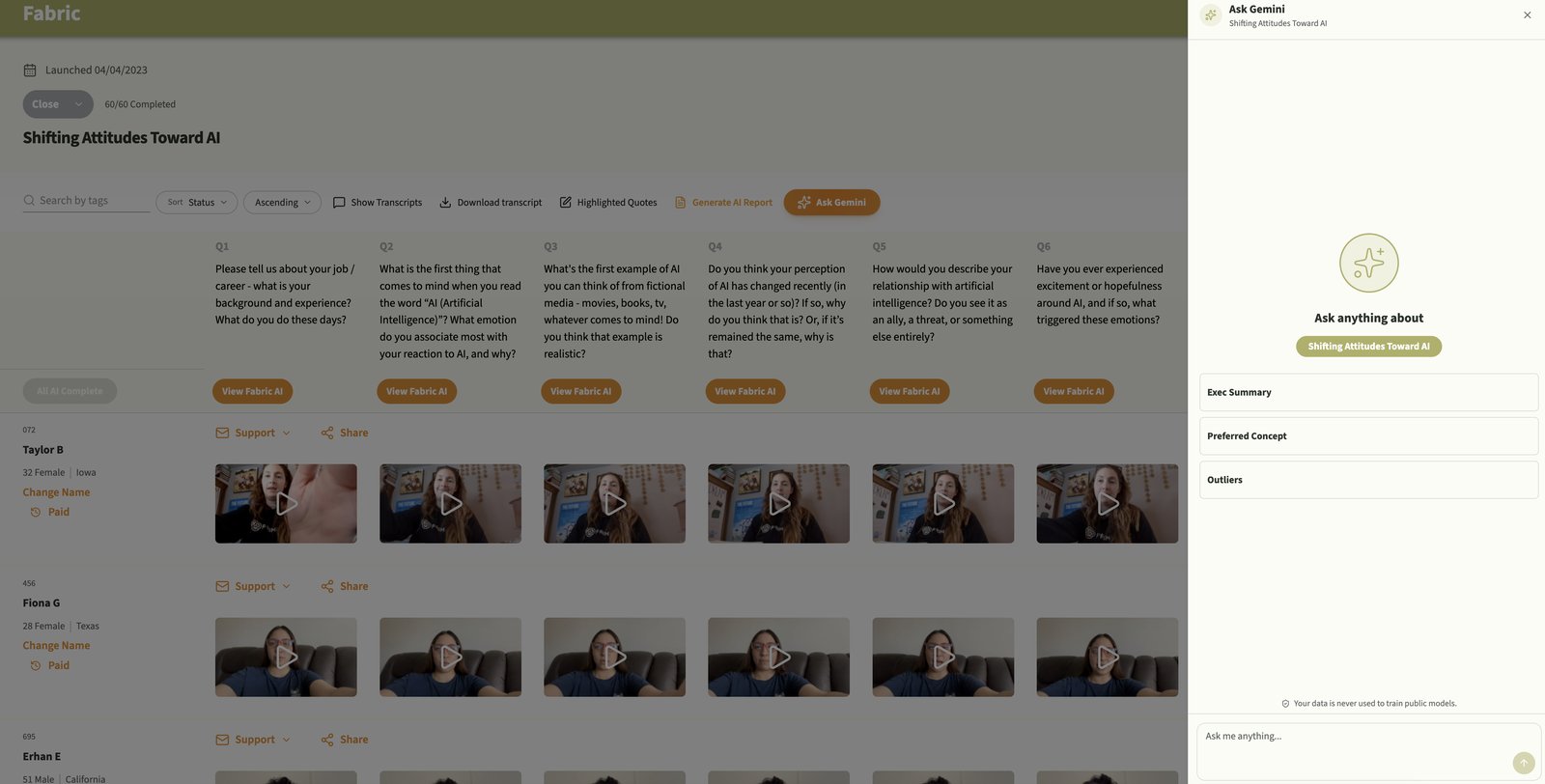
Fabric had award-winning sentiment AI and a real risk: being read as one more survey app with a clever add-on at the end. The way out was not a better feature. It was re-framing the aspirational role of the researcher.
The market
Two forces were squeezing qualitative researchers at once. The market was flooded with DIY research tools, each promising that anyone could run a study. And corporate layoffs meant the researchers who remained were carrying more studies with less help. The practical result was that skilled people were spending their days managing tedious studies by hand: recruiting, screening, fielding, chasing, cleaning.
Fabric sat inside that market with a real advantage. We had built award-winning emotion and sentiment tools, recognized as an IIEX Innovation Award finalist. But an advantage at the end of the workflow does not change the workflow.
The add-on trap
Seen from a buyer’s desk, Fabric risked looking like just another survey app with an AI step bolted on at the end. Build the study yourself, field it yourself, manage it yourself, and then, finally, let the AI read the results. That is ‘AI as a feature,’ and in a crowded market it is a losing position: every competitor can add a feature.
A feature at the end of the workflow does not change the workflow.
Reframing the researcher
The shift started with a question about people, not technology. What should a qualitative researcher actually be doing all day? Not managing surveys. The highest-value work a researcher does is synthesis and storytelling: finding the signal in hundreds of human moments and turning it into something internal stakeholders can act on.
So I reimagined the role. Researchers shouldn’t be manual survey managers. They should be Chief Story Architects. Everything operational that stands between a researcher and that job is work an agent can do.
What the agents do
The vision became a design brief: AI agents handle the operational dirty work so researchers can focus entirely on high-signal synthesis and storytelling. Concretely, that meant agents that take on the jobs researchers least want and that most often go wrong when rushed.
Detecting bot respondents. Protecting the sample before a single clip is analyzed, so the humans in the data are actually human.
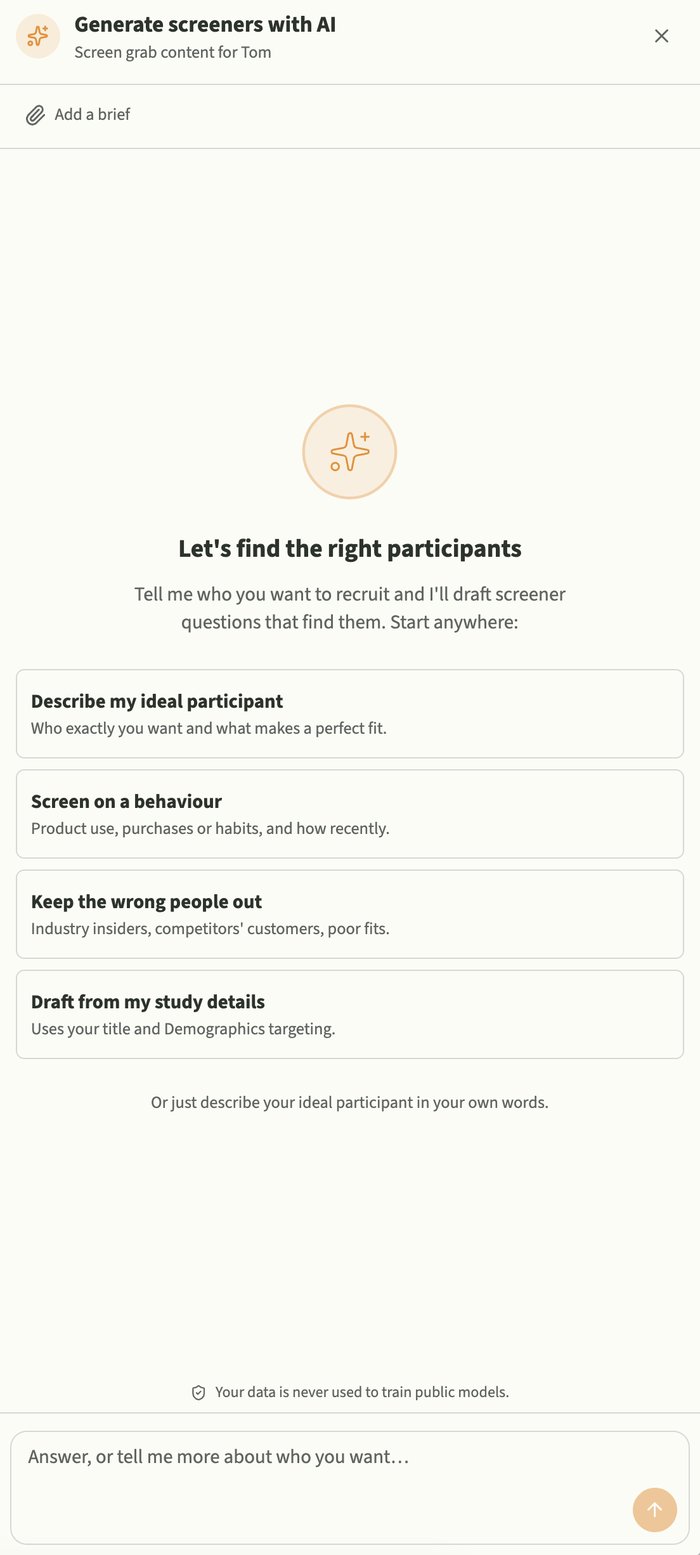
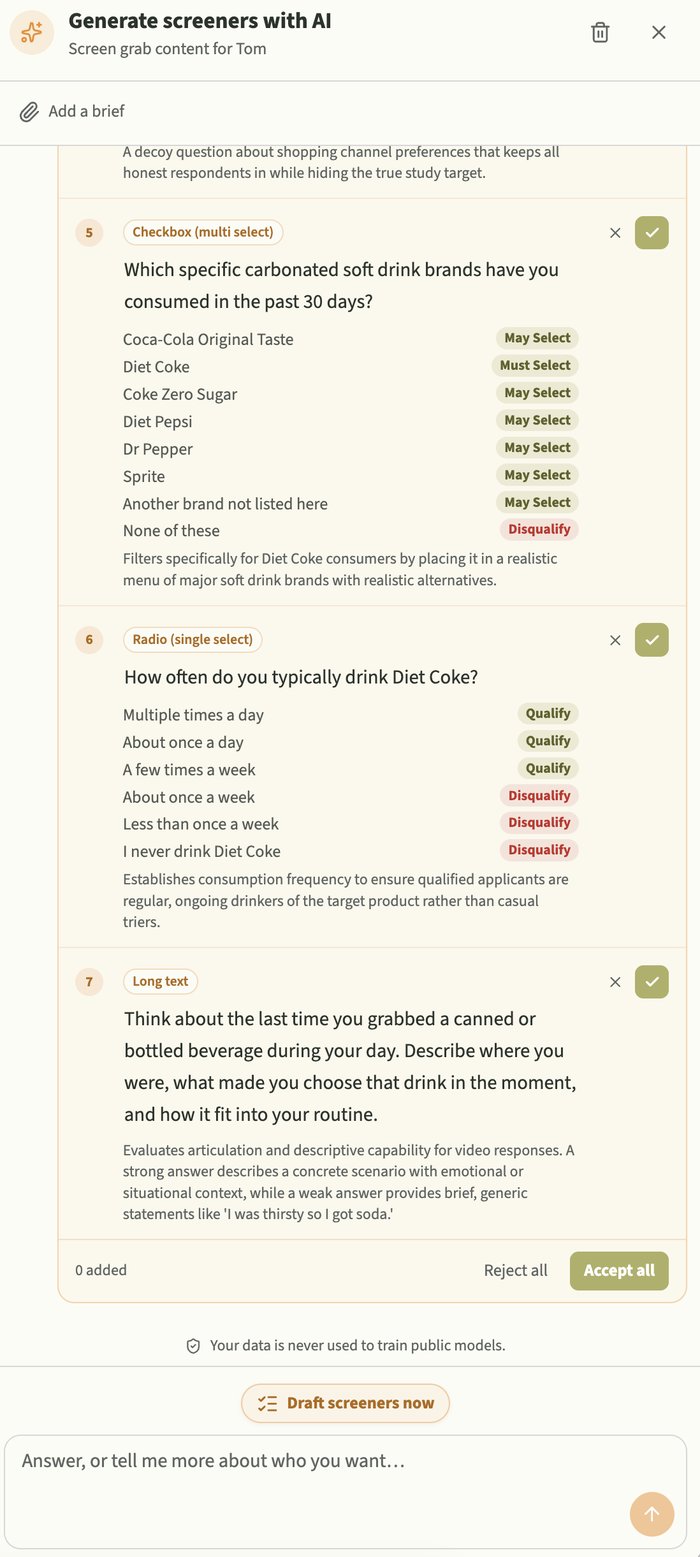
Writing screeners. Turning a study objective into recruiting criteria that find the right people, not just available ones.
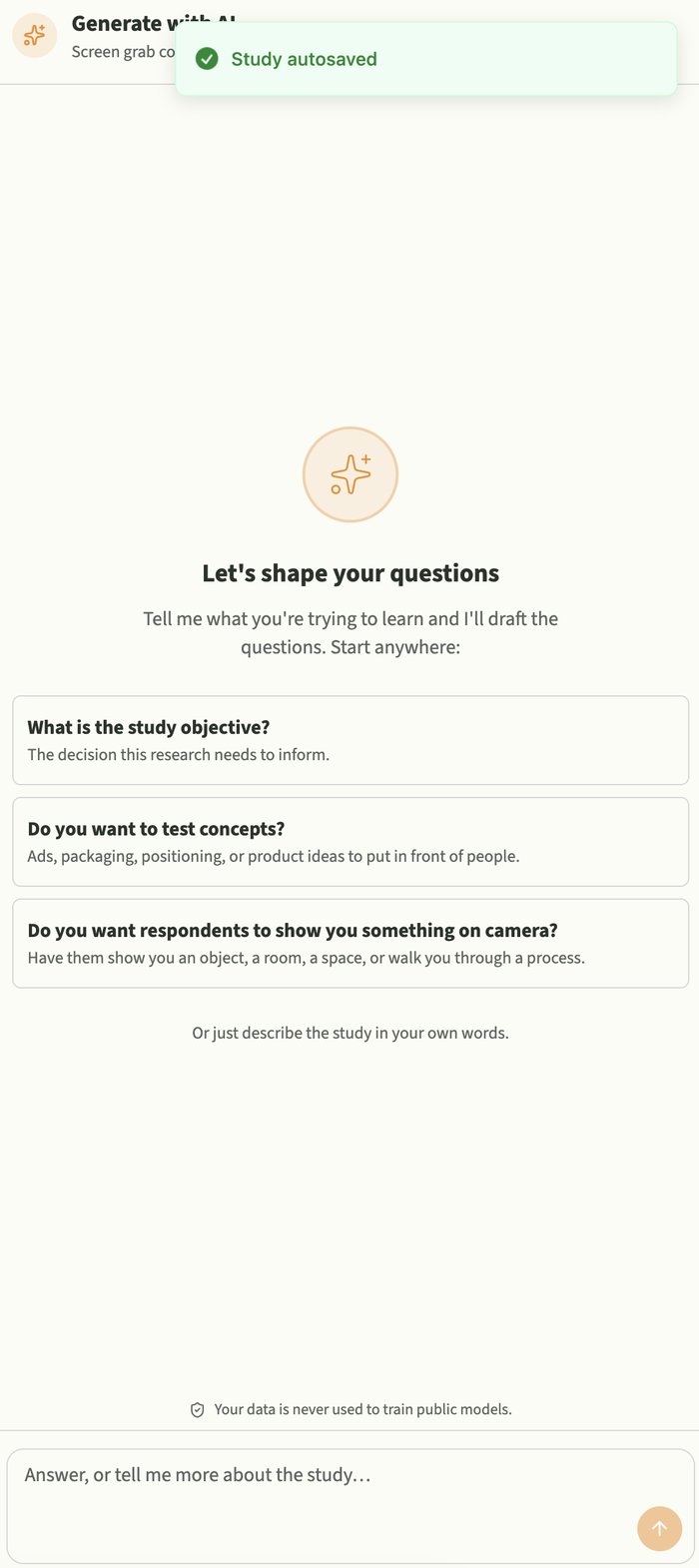
Structuring study questions. Shaping the objective into a question flow that produces usable, comparable responses.
Each agent is trained on 15+ years of strategic research methodology, so the operational work is done the way an experienced researcher would do it, not the way a form builder would.
The transformation
I led the product architecture transformation to make Fabric fully AI-native. The agents run as a sequential sequence, each one’s output feeding the next, from study setup through fielding to synthesis, rather than as a single AI step tacked onto the end. The end-to-end experience was rebuilt around that flow, with the researcher positioned at the point where their judgment matters most.
Where Fabric stands
The result is a different category of product. Fabric is no longer a survey app with an AI add-on; it is an intelligent partner for qualitative discovery, with the operational work handled and the researcher free to do the work only a researcher can. That is the position we are building toward: the premier intelligent partner for qualitative discovery.
A Product x AI case study.